
Context approved
The customer confirms scope, access, acceptance criteria, change windows, and named approvers before build activity begins.
Microsoft cloud, security, and AI implementation for regulated and mid-market organizations. Learn More →
Simplicity IT Professional Service | Eight-week implementation
A data-center exit or VMware migration needs a controlled workload wave, tested connectivity, rollback ownership, operational evidence, and customer approval at every production checkpoint.
Confirm scope, dependencies, change control, acceptance criteria, and the low-level design for the landing zone, private cloud, connectivity, security, backup, and operations.
Deploy and validate the approved Azure and Azure VMware Solution foundation, connectivity, migration tooling, and pilot runbook.
Migrate the approved pilot, resolve in-scope defects, then execute one approved production wave with checkpoint evidence and rollback readiness.
Complete operational validation, cost and capacity review, knowledge transfer, as-built evidence, and the remaining-wave plan.
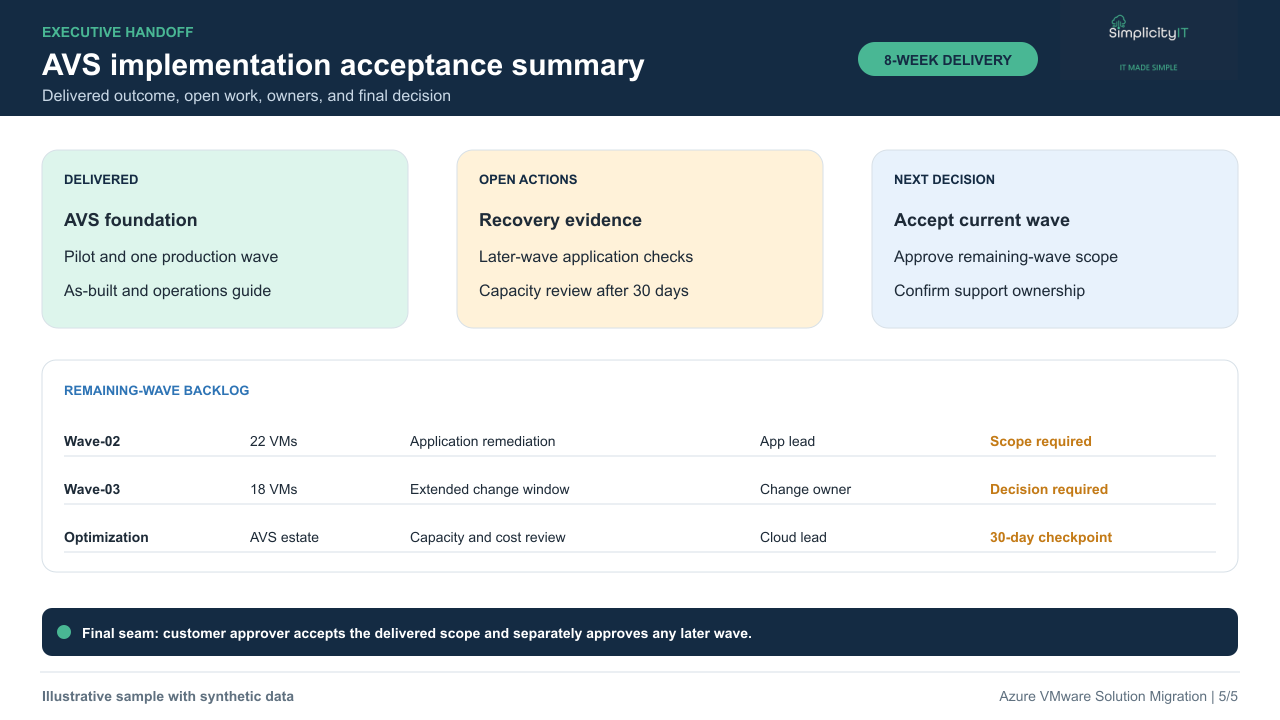
These illustrative examples show the deliverables you can expect. They use synthetic data and do not depict customer environments.
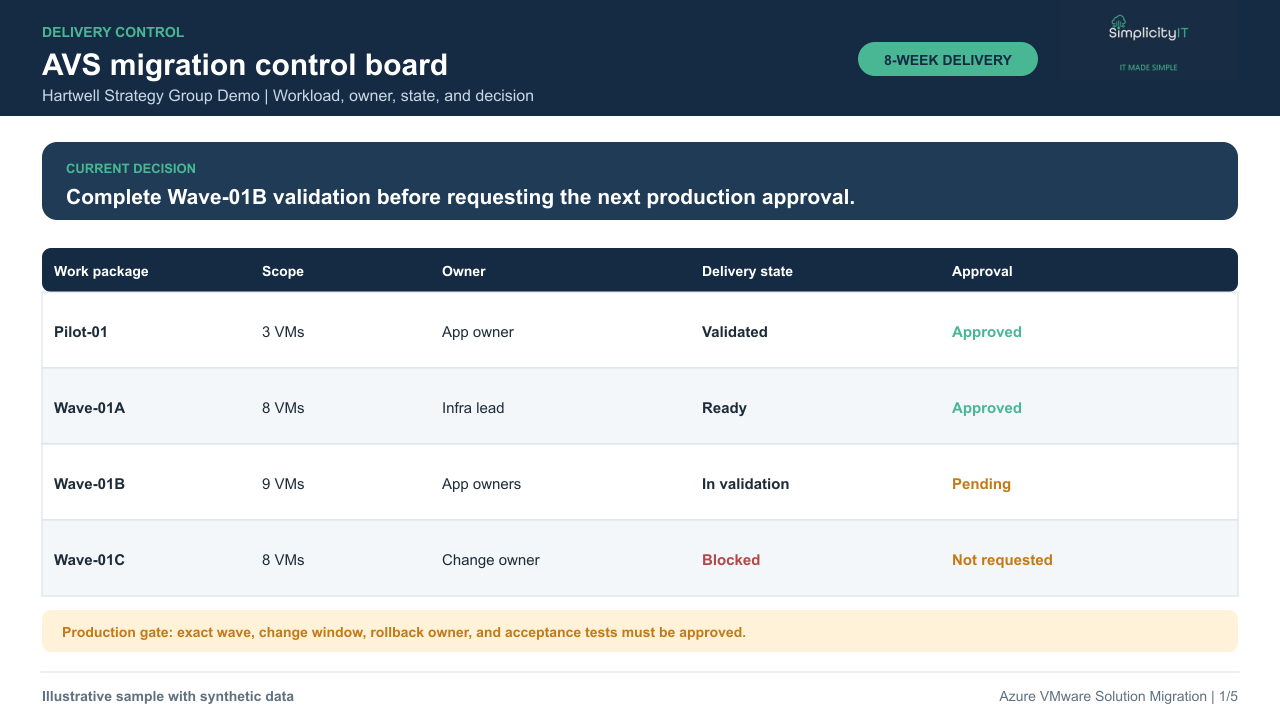
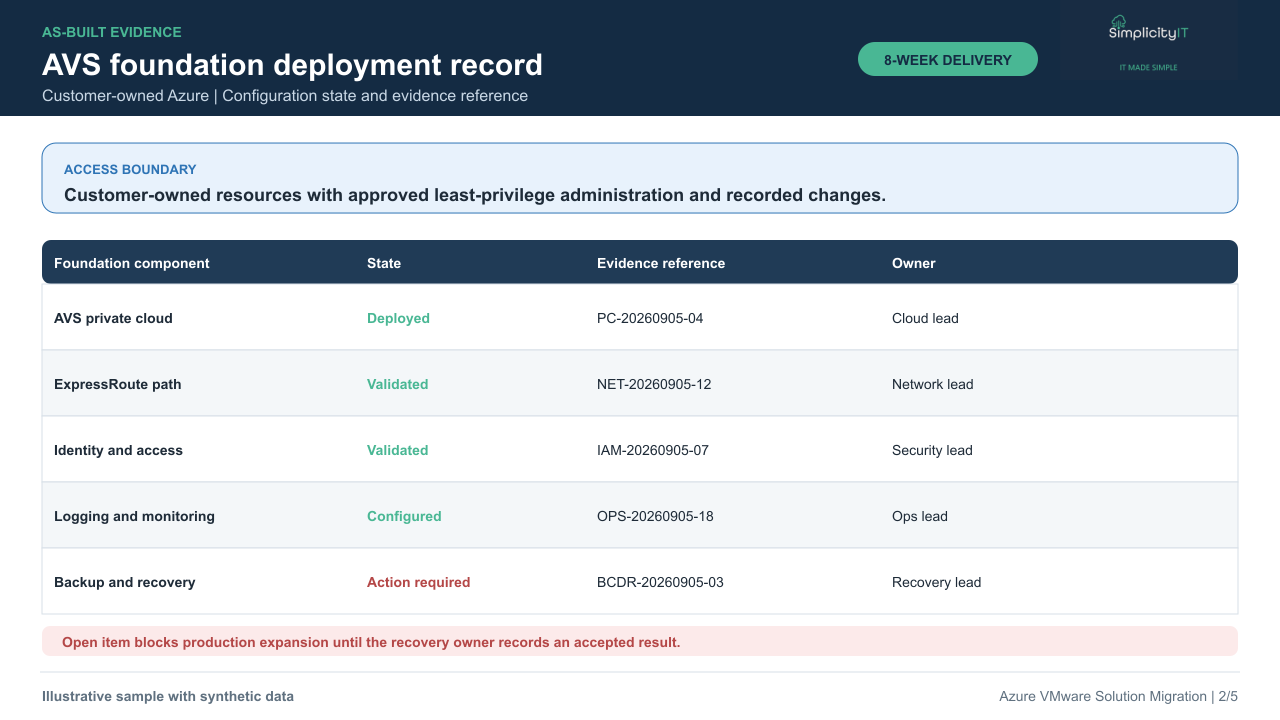
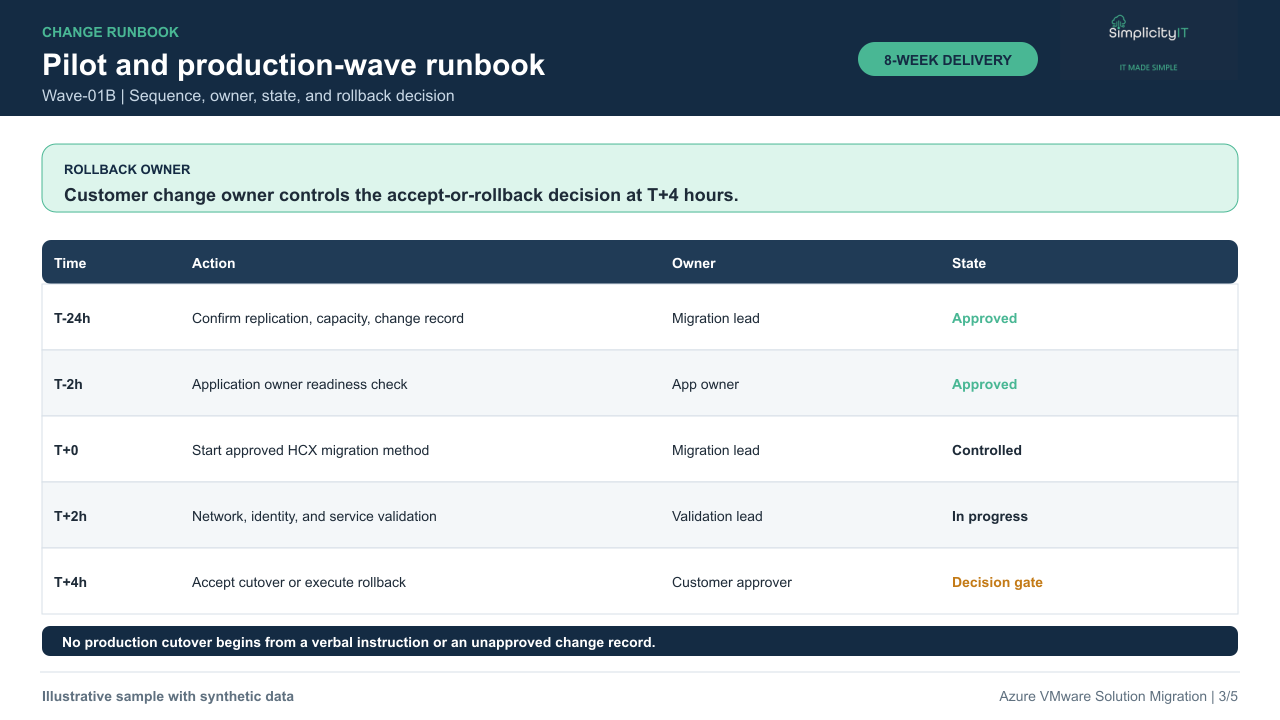
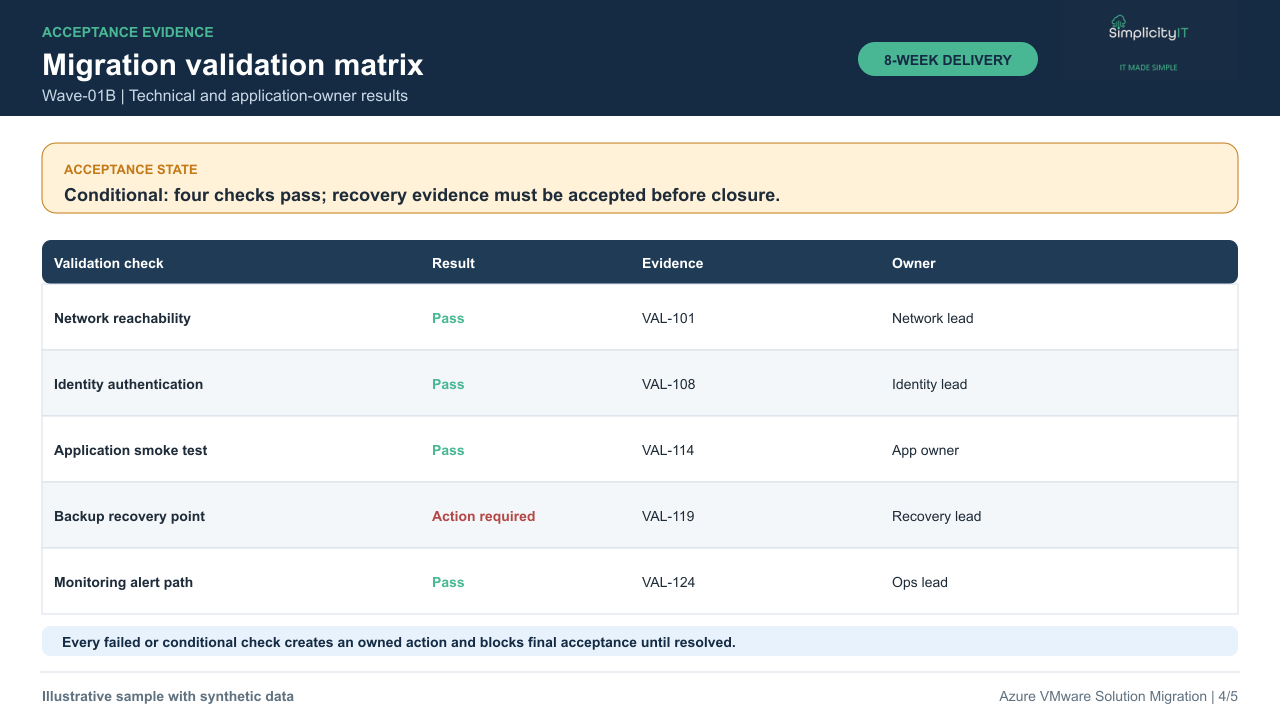
The customer confirms scope, access, acceptance criteria, change windows, and named approvers before build activity begins.
Simplicity IT builds and tests only the accepted work packages in the customer-owned environment, with evidence recorded at each checkpoint.
A named customer owner reviews the exact change, test result, rollback path, operating owner, and cost impact before any production effect or cutover.
The as-built record, acceptance evidence, rollback status, decision log, and operational handoff are retained according to the customer agreement.
A named customer owner approves each production change or cutover against the agreed scope, test evidence, rollback path, operating owner, and expected cost before it proceeds.
Tell us about your environment and priorities. We will confirm the scope, schedule, and purchasing options with you before work begins.
Discuss this engagement